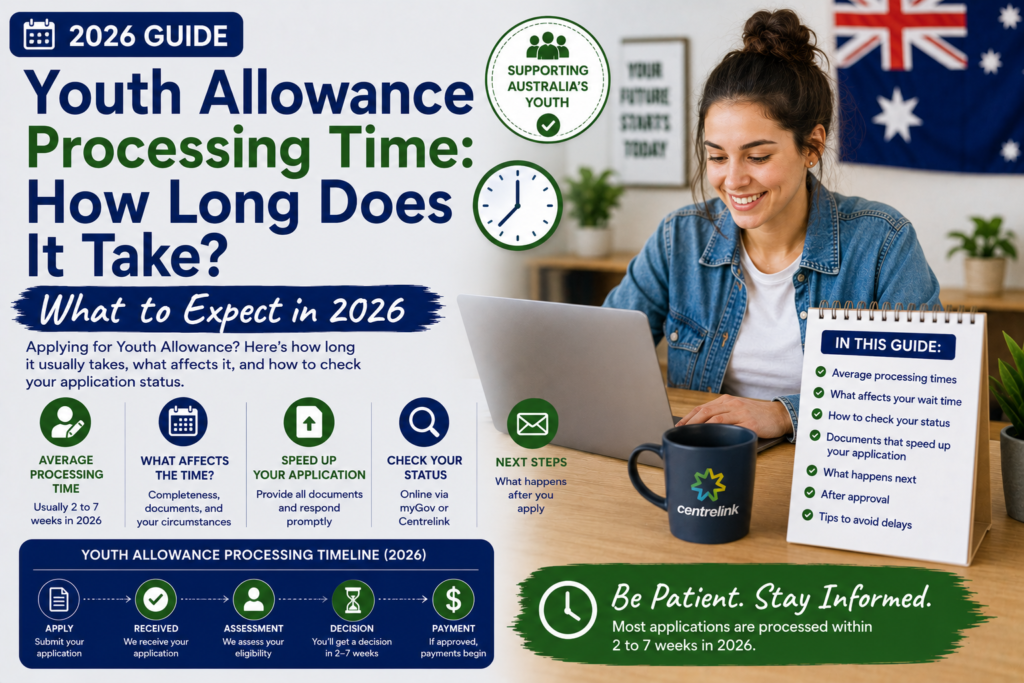
Youth Allowance Processing Time: How Long Does It Take?
Applying for income support as a student, apprentice, or young job seeker can be an overwhelming experience, especially when you are relying on that financial assistance to make ends meet. One of the most common and pressing questions young Australians ask is: What is the average Youth Allowance processing time?
When you submit an application to Services Australia, your claim enters a queue for assessment. The processing timeframe can vary dramatically depending on your personal circumstances, the time of year you apply, whether you have provided all the correct documentation, and how complex your family’s financial situation is. Being left in the dark about when your payments will commence can cause significant financial stress, impacting your studies, training, or ability to look for work.
In this comprehensive, fully updated guide, we will break down exactly how long you can expect to wait for your Youth Allowance claim to be approved in 2026. We will explore the different timeframes for students versus job seekers, highlight the most common mistakes that cause severe delays, and provide actionable tips on how to speed up the process. Furthermore, we’ll show you step-by-step how to track your claim online so you always know where you stand.
Whether you are a school leaver preparing for university, a newly signed Australian Apprentice, or a young adult searching for employment, understanding the Centrelink processing timelines is crucial for managing your financial future.
Key Takeaways
- Average Wait Times: Youth Allowance processing times generally range from 2 to 6 weeks, but peak periods (like February and March) can push processing times to 8 weeks or more.
- Status Matters: Applications for Job Seekers are often processed faster than Student applications, as student claims typically require complex parental income assessments.
- Preparation is Key: Providing all required supporting documents at the exact time of application is the single most effective way to avoid frustrating delays.
- Digital is Faster: Applying through your linked myGov account is significantly faster and more secure than submitting paper forms.
- Hardship Provisions: If you are experiencing severe financial distress while waiting for your claim to be approved, you may be eligible to apply for urgent processing or an advance payment.
Understanding Youth Allowance Processing Times
When we talk about the Youth Allowance processing time, we are referring to the duration between the moment you submit a complete application (including all necessary supporting documents) to Centrelink, and the day you receive an official outcome letter regarding your eligibility.
It is important to understand that the “processing clock” does not truly start ticking until you have submitted every single piece of evidence required to support your claim. Many applicants mistakenly believe their claim is being processed immediately after hitting “submit” on the initial form, only to realise weeks later that Centrelink has paused their application while waiting for identity documents or parental income details.
The processing system operated by Services Australia handles millions of claims across various benefit types each year. Because Youth Allowance often involves evaluating the income and assets of not just the applicant, but also their parents or guardians (unless the applicant is classified as independent), the assessment process is inherently more complex than many other government payments.
If you are confused about what payments might be available to you beyond Youth Allowance, you can utilize our Benefits Calculator to explore your options comprehensively.
Who is Eligible for Youth Allowance?
Before diving into the exact timeframes, it is vital to ensure you are actually applying for the right payment. Applying for a payment you are not eligible for is a guaranteed way to waste weeks of processing time only to receive a rejection. Youth Allowance is generally divided into distinct streams based on your current life situation. You can use our Youth Allowance Checker to quickly verify your eligibility status.
To be eligible for Youth Allowance, you generally must be an Australian resident and fit into one of the following main categories:
- Full-Time Students: You must be aged between 16 and 24 and studying an approved full-time course at a high school, TAFE, university, or other approved higher education provider. If you are 25 or older, you usually need to apply for Austudy instead.
- Australian Apprentices: You must be aged 16 to 24 and undertaking a full-time, approved Australian Apprenticeship. Your apprenticeship must be formally registered.
- Job Seekers: You must be aged 16 to 21 and actively looking for full-time work. You will need to agree to a Job Plan and meet mutual obligation requirements, such as applying for a set number of jobs each month. Once you turn 22, you transition to the JobSeeker Payment.
Furthermore, Centrelink will assess you as either dependent or independent. If you are dependent (which is the default status for most young people), your parents’ or guardians’ income and assets will be assessed to determine how much Youth Allowance you can receive. Proving independence requires meeting strict criteria, such as proving you have supported yourself through full-time work for a certain period, or showing that it is unreasonable for you to live at home.
How Long Does Youth Allowance Processing Take?
The core question for any applicant is: how long will I be waiting? The reality is that there is no single, universal timeframe. Processing times fluctuate based on Centrelink’s current workload, the complexity of your specific case, and whether you apply during a peak period.
However, we can look at the average service standards and historical processing data to give you a highly accurate estimate of what to expect.
Estimated Timeframes for Students and Apprentices
For full-time students and apprentices, the standard processing time for Youth Allowance is generally between 21 to 42 days (3 to 6 weeks).
Why does it take this long? Student claims are often the most complex applications Centrelink processes. The assessing officers must verify your enrolment details with your education provider (often via the Department of Education data matching systems), assess your personal income and assets, and—most significantly—assess your parents’ income. If your parents run a small business, have family trusts, or have complex tax arrangements, the manual assessment required by Centrelink staff takes considerable time.
The Peak Period Delay: If you are applying for Youth Allowance as a student between January and March, you must brace yourself for longer wait times. This period is the start of the academic year in Australia, and Centrelink is inundated with hundreds of thousands of student claims simultaneously. During this peak rush, it is entirely common for processing times to stretch to 8 weeks or even longer. To mitigate this, Centrelink always advises students to claim up to 13 weeks before their course actually begins.
Estimated Timeframes for Job Seekers
If you are applying for Youth Allowance as a Job Seeker, the processing times are generally faster than student applications. On average, Job Seeker claims are processed within 14 to 28 days (2 to 4 weeks).
These claims are often expedited because young people looking for work are typically in more immediate need of income support, and there is no need to wait for academic enrolment verification. However, you will still be subject to parental income testing if you are under 22 and not classified as independent.
It is important to note that even after your claim is approved, you may be subject to a waiting period before you receive your first payment. These can include the Ordinary Waiting Period (usually one week), the Liquid Assets Waiting Period (if you have savings), or an Income Maintenance Period (if you recently received a payout from an employer).
To check when your specific payments might land after approval, bookmark our handy Centrelink Payment Date Checker.
Step-by-Step Process: How It Works
Understanding the application lifecycle can help alleviate the anxiety of waiting. If you follow the correct sequential steps, you significantly reduce the risk of your application being pushed to the back of the queue.
Here is the standard step-by-step process for claiming Youth Allowance:
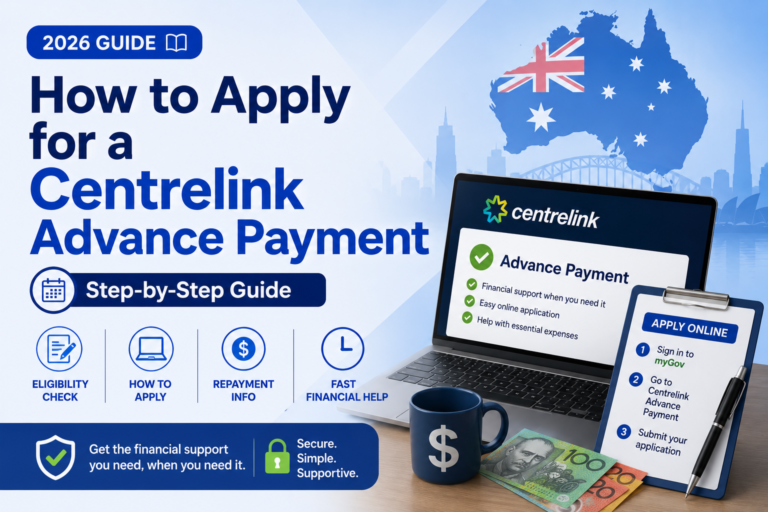
- Create and Link Accounts: Your first step must be creating a myGov account. Once created, you must link it to Centrelink. If you have never received a Centrelink payment before, you will need to prove your identity to get a Customer Reference Number (CRN) before you can link the accounts. You can follow our Guide to Linking Centrelink to myGov if you need assistance.
- Gather Your Documents: Before you even click ‘Start Claim’, ensure you have digital copies of all required documents. This includes tax file numbers, bank statements, and parental income details. Having these ready prevents your claim from timing out or being submitted incomplete.
- Submit the Claim Online: Log into your myGov account, navigate to Centrelink, select ‘Make a Claim’, and choose Youth Allowance. The online wizard will ask you a series of adaptive questions based on your circumstances (student, apprentice, or job seeker).
- Upload Supporting Evidence: At the end of the questionnaire, you will be presented with a checklist of required documents. Upload these directly through the portal. Do not mail them unless absolutely necessary, as paper processing adds weeks to your wait time.
- Attend an Appointment (If Required): Job Seekers may be required to attend a phone or in-person interview to finalize their Job Plan. Students usually do not require an interview unless their circumstances are exceptionally complex.
- Wait for Assessment: This is where the processing time kicks in. Centrelink staff will review your digital file, verify data with the ATO and educational institutions, and calculate your entitlement.
- Receive Outcome: You will receive a notification in your myGov Inbox advising you of the outcome. If approved, it will detail your payment amount, reporting requirements, and the date of your first payment.
Documents Required for a Fast Decision
The golden rule of Centrelink applications is: a complete claim is a fast claim. Failure to provide the correct documentation is the number one reason Youth Allowance processing times blow out into multiple months. By understanding exactly what is needed, you can ensure your application moves smoothly through the assessment queue.
Here is a comprehensive checklist of what you will likely need to provide:
- Proof of Identity: If you are a new customer, you need to provide primary and secondary ID documents (e.g., Australian Passport, Birth Certificate, Driver Licence, Medicare Card).
- Tax File Number (TFN): You must provide your TFN. If you do not have one, you must apply for one and provide Centrelink with proof of your application. You can learn more about TFN processing at our TFN Processing Time Guide.
- Bank Account Details: The BSB and account number of an Australian bank account in your name where the allowance will be paid.
- Study or Training Proof: For students, an official letter of offer or proof of enrolment confirming your course name, institution, and full-time study load. Apprentices require a registered training contract.
- Personal Income and Assets: Payslips from any current part-time jobs, and recent bank statements showing your current savings and assets.
- Parental Income Details: If you are dependent, your parents will need to provide their income details. This is usually done by them completing a Parental Income Test Assessment form (Mod PT) or providing their TFN so Centrelink can automatically pull their tax return data from the ATO. If your parents’ tax affairs are complex, they may need to provide full financial statements.
- Proof of Independence (If applicable): If you are claiming independence, you must provide robust evidence. This could include group certificates (PAYG summaries) proving you have worked enough hours, or documentation from social workers or police if it is unsafe for you to live at home.
If you are struggling to understand what documents apply to your unique situation, we recommend reviewing our comprehensive Application Support Guide for deeper insights into managing government paperwork.
Why Is My Youth Allowance Claim Taking So Long?
If you have been waiting beyond the standard 6-week timeframe, it is natural to feel frustrated and worried. Claims rarely get “lost in the system” entirely; instead, they usually get paused or flagged for manual review due to discrepancies or missing information.
Understanding the bottlenecks can help you proactively resolve the issue.
Common Mistakes That Delay Processing
- Incomplete Parental Income Data: This is the most frequent cause of delay for students. If your parents have not lodged their most recent tax return with the ATO, Centrelink cannot assess their income automatically. This forces your claim into a holding pattern until the tax returns are lodged or manual estimates are provided and verified.
- Submitting Documents Separately: Submitting your claim on Monday, and then uploading your bank statements on Friday, disrupts the workflow. The assessing officer who picked up your file on Tuesday will have put it on hold. It then takes time for the file to be re-allocated once the new documents arrive.
- Complex Living Arrangements: If you claim you live away from home for study because the commute is too long, Centrelink must manually map the route and check public transport timetables to verify your claim. If you haven’t provided clear evidence, this manual check causes significant delays.
- Name Mismatches: If the name on your bank account, your myGov account, and your university enrolment do not match perfectly (e.g., using a middle name on one but not the other), the automated data matching systems will fail, requiring a human to manually verify your identity.
- Failing to Respond to Requests: Centrelink may send a letter to your myGov inbox asking for clarification. If you do not have notifications turned on and fail to respond within 14 days, your claim may be suspended or outright rejected. Regularly checking your myGov portal is essential.
Tips to Speed Up Your Youth Allowance Application
While you cannot force Centrelink to process your claim instantly, you can adopt strategies that place your application in the best possible position for rapid approval.
- Claim Early: For students, you can submit your claim up to 13 weeks before your course actually starts. By applying in November or December for a course starting in March, you entirely avoid the massive peak processing backlog. Your claim will be assessed, and payments will simply be scheduled to commence when your study begins.
- Use Digital Services Exclusively: Avoid paper forms and mailing documents at all costs. Utilize the Digital Services provided by Services Australia. Upload high-quality, readable photos or PDFs of your documents directly via the Express Plus Centrelink app or the website.
- Ensure Your Parents Are Ready: Talk to your parents before you apply. Ensure they have their TFNs ready, and ideally, have already lodged their tax returns for the previous financial year. Explain to them that their prompt cooperation is essential for your financial support.
- Double-Check Everything: Before hitting submit, meticulously review every single field. Ensure your BSB and account numbers are perfect. A single transposed digit can result in your payment bouncing back, adding weeks to the resolution process.
- Set Up SMS Notifications: Inside your myGov account, configure your settings to receive SMS alerts whenever a new letter arrives in your inbox. This ensures you never miss a request for further information. Use our myGov Account Checklist to ensure your settings are optimized.
How to Track Your Youth Allowance Claim
Sitting in silence waiting for a decision is highly stressful. Thankfully, Services Australia provides digital tools that allow you to monitor the progress of your Youth Allowance application in real-time.
Here is how you can check your claim status:
- Via the myGov Website:
- Log into your myGov account.
- Click through to your linked Centrelink service.
- From the main menu, navigate to ‘My Claims’.
- Here, you will see a list of your active and past claims. Your Youth Allowance claim will display a status such as Submitted, In Progress, On Hold, or Completed.
- If the status is On Hold, it almost certainly means Centrelink is waiting for you to provide an additional document. Check your inbox immediately.
- Via the Express Plus Centrelink App:
- Open the app on your smartphone and log in using your PIN or biometric ID.
- Tap on ‘More’ in the bottom menu.
- Select ‘Claims’.
- You will see an estimated completion date. Note that this is purely an estimate generated by an algorithm; it is not a guaranteed finalisation date.
If your claim has wildly exceeded the estimated completion date, and you are certain you have provided all documents, you may need to contact Centrelink directly via the Youth and Students phone line. Be prepared for long hold times, and ensure you have your CRN handy.
Frequently Asked Questions
How long does Youth Allowance take to get approved?
On average, Youth Allowance takes between 2 to 6 weeks to process. Job Seeker claims are generally faster (2 to 4 weeks), while Student claims often take longer (3 to 6 weeks) due to the need for parental income testing. During peak periods like February and March, student claims can take up to 8 weeks or more.
Can I speed up my Youth Allowance processing time?
You cannot ‘skip the queue’, but you can prevent delays by ensuring your application is 100% complete when submitted. Claim up to 13 weeks early, upload all required supporting documents digitally immediately, ensure your parents have lodged their tax returns, and respond to any Centrelink requests on the same day.
What happens if my Youth Allowance takes longer than the estimated completion date?
The estimated completion date on your myGov portal is only a guide. If your claim passes this date, first check your myGov Inbox and the “Tasks” section to ensure Centrelink isn’t waiting on you for a document. If everything is submitted, your claim is simply in a backlog and will be processed as soon as an officer is available.
Will my Youth Allowance be backpaid?
Yes, in most cases, if your claim is approved, you will be backpaid to the date you originally submitted the complete claim (or the date your course started, whichever is later), minus any applicable waiting periods. This means you won’t lose money just because Centrelink took 6 weeks to process the paperwork.
What can I do if I am in severe financial hardship while waiting?
If you have less than a certain amount of money in the bank and cannot afford basic living expenses (like food or rent) while waiting for your claim to be processed, you should call Centrelink immediately. Request to have your claim assessed under ‘Severe Financial Hardship’ provisions. They may be able to expedite the processing or offer you an urgent advance payment.
Conclusion
Navigating the Australian welfare system can be an exercise in patience. Understanding the Youth Allowance processing time allows you to plan your finances effectively, reducing stress as you commence your studies, start an apprenticeship, or search for work.
Remember that the key to a fast approval lies entirely in your preparation. By utilising the digital tools available through your myGov account, claiming early, and ensuring every piece of required documentation—especially parental income evidence—is provided upfront, you position your application for the smoothest possible journey through the assessment queue.
If you find yourself waiting extensively, always check your portal for outstanding tasks before calling the support lines. Stay proactive, stay informed, and use the resources provided in this guide to secure your vital income support.
Disclaimer
PublicServicesDesk.com is an independent informational website and is not affiliated with, endorsed by, or operated by the Australian Government, Services Australia, Centrelink, Medicare, MyGov, the Australian Taxation Office (ATO), or the Department of Home Affairs. Information is provided for general educational purposes only and may change over time. Always verify important details through official Australian Government websites before making decisions or submitting applications.