Home > Centrelink > Centrelink Waiting Period for New Migrants
Centrelink Waiting Period for New Migrants Explained (2026 Rules)
Receiving the golden email from the Department of Home Affairs confirming your Australian Permanent Residency is a life-changing moment. After years of temporary visas, expensive application fees, and bureaucratic stress, you are finally a permanent fixture in one of the world’s most stable economies.
However, many new migrants are hit with a harsh reality check shortly after their visa is granted. They assume that holding a Permanent Resident (PR) visa grants them immediate access to the entire Australian social security safety net. It does not.
The Australian Government operates on the principle that people choosing to migrate to Australia should be financially self-sufficient or supported by their family/sponsors, rather than relying on the Australian taxpayer immediately upon arrival. To enforce this, Services Australia utilizes a legislative mechanism known as the Newly Arrived Resident’s Waiting Period (NARWP).
In recent years, the government has drastically expanded the NARWP. What used to be a standard 2-year wait for a few payments has ballooned into a rigid 4-year waiting period that encompasses almost every major income support payment in the country.
In this comprehensive 2026 guide, we will explain exactly how the Centrelink Waiting Period for New Migrants works. We will break down which payments require a 4-year wait (like JobSeeker), which family payments are accessible immediately, how time spent on previous temporary visas is calculated, and the rare exemptions available if you suffer a severe, sudden change in circumstances.
Key Takeaways
- The 4-Year Rule (NARWP): Most new Permanent Residents must wait a full 208 weeks (4 years) before they can receive primary income support payments like JobSeeker, Youth Allowance, or Austudy.
- Family Payments are Exempt: The government does not want migrant children living in poverty. You do not have to wait 4 years to claim the Family Tax Benefit (FTB) or the Child Care Subsidy (CCS). These are usually available immediately upon PR grant.
- Temporary Visa Time Can Count: Depending on the specific payment, the time you spent living in Australia on certain eligible temporary visas before your PR was granted might count towards your 4-year waiting period.
- Exemptions for Hardship: If you experience a “substantial change in circumstances beyond your control” after arriving in Australia (such as becoming a victim of domestic violence or suffering a catastrophic workplace injury), the waiting period can be waived via a Special Benefit.
- Medicare is Separate: Access to Medicare is separate from the Centrelink NARWP. Most migrants are eligible for Medicare the moment they lodge a valid application for a Permanent Visa, long before the visa is even granted.
What is the Newly Arrived Resident’s Waiting Period (NARWP)?
The Newly Arrived Resident’s Waiting Period (NARWP) is a specific length of time that new migrants must serve before they are legally allowed to claim Australian welfare payments. To be subject to the NARWP, you must first be an Australian resident (which generally means holding a permanent visa). You cannot even begin to serve the waiting period while living offshore waiting for a visa.
Historically, the standard waiting period was 104 weeks (2 years). However, through recent legislative amendments designed to save the federal budget billions of dollars, the waiting period for almost all major working-age payments was doubled to 208 weeks (4 years).
This means if you secure your PR today and lose your job tomorrow, you cannot simply walk into Centrelink and ask for unemployment benefits. You must rely on your own savings, your sponsor, or your family to survive the next four years.
Payments Requiring a 4-Year Wait
The 4-year (208-week) waiting period applies to all primary income support payments. These are the payments designed to replace a full-time wage if you are unemployed, studying, or experiencing illness.
You must wait 4 years to claim:
- JobSeeker Payment (for unemployed adults looking for work).
- Youth Allowance (for young job seekers and students).
- Austudy (for full-time students aged 25 and over).
- Parenting Payment (Single and Partnered).
- Mobility Allowance.
- Sickness Allowance (now rolled into JobSeeker).
Payments Requiring a 1 or 2-Year Wait
A few specific payments were spared from the 4-year expansion, though they still enforce a waiting period.
- Carer Payment: You must wait 104 weeks (2 years) before you can claim this income support payment for providing constant care to someone with a severe disability.
- Carer Allowance: You must wait 52 weeks (1 year) before you can claim this supplementary payment.
- Parental Leave Pay: You must usually serve a 104-week (2-year) waiting period to access the government’s paid parental leave scheme after the birth or adoption of a child.
- Dad and Partner Pay: (Note: This has been integrated into the broader Parental Leave Pay scheme, which carries the 2-year wait).
Payments with NO Waiting Period
The Australian Government actively shields children from poverty, regardless of their parents’ visa status. If you hold a Permanent Resident visa, you can usually claim the following family-assistance payments immediately, with zero waiting period:
- Family Tax Benefit (Part A and Part B): A per-child payment to help with the cost of raising children.
- Child Care Subsidy (CCS): Government assistance to pay for approved day-care and after-school care services.
- Double Orphan Pension: Support for children whose parents are deceased.
Note: While there is no NARWP for these payments, you must still meet all other standard income and assets tests to receive them.
How is the Waiting Period Calculated?
Calculating exactly when your 4-year (208-week) waiting period ends is complex, and Centrelink uses automated software to track your movements in and out of the country.
- The Start Date: The waiting period officially begins on the date you became an Australian resident (the date your permanent visa was granted) OR the date you physically arrived in Australia, whichever happened later.
- Time Spent on Temporary Visas: In a major benefit to migrants, the time you spent living continuously in Australia on certain eligible temporary visas (such as a 482 TSS work visa, a student visa, or a bridging visa while waiting for your PR to process) can often be counted toward your 4-year waiting period for payments like JobSeeker. This means if you lived in Australia for 3 years on a work visa, then got your PR, you might only have 1 year left to wait. (Note: The rules regarding which temporary visas count are highly specific and subject to change; Services Australia will calculate this automatically when you apply).
- Time Spent Offshore: If you get your PR and then immediately fly back to your home country for a 6-month holiday, those 6 months do not count towards your waiting period. You must be physically present in Australia to accrue waiting period weeks.
Exemptions: Who Doesn’t Have to Wait?
Certain classes of migrants are entirely exempt from the NARWP because of the humanitarian nature of their arrival or historical reciprocal agreements.
You are exempt from all waiting periods if:
- Refugees and Humanitarian Migrants: You arrived in Australia on a Refugee or Humanitarian visa (or hold a specific protection visa). You can access JobSeeker and other payments immediately.
- Family of Refugees: You are the partner or dependent child of a refugee/humanitarian visa holder.
- New Zealand Citizens (Special Category): The rules for NZ citizens have changed dramatically recently. Many eligible NZ citizens who have lived in Australia long-term can now transition directly to Australian Citizenship, bypassing the PR stage and the associated Centrelink wait times. Always check current bilateral agreements.
Emergency Exemptions: The Special Benefit
What happens if you migrate to Australia as a skilled worker, pass the medical checks, secure your PR, but two years later you are involved in a catastrophic car accident and can never work again? Or what if you suffer severe domestic violence and must flee your home with nothing?
The government will not let you starve on the streets while you wait out the remaining 2 years of your NARWP.
If you experience a substantial change in circumstances beyond your control after you became an Australian resident, you can apply for the Special Benefit.
The Special Benefit is a safety net payment of last resort. To get it, you must prove:
- You are suffering severe financial hardship (you have virtually $0 in the bank).
- The change in your circumstances was entirely unpredictable and out of your control (e.g., sudden onset of a severe medical condition, domestic violence, or the sudden death of your sponsoring partner).
- The change occurred after you became a resident. (You cannot migrate to Australia with a pre-existing severe illness and immediately claim the Special Benefit).
If approved, the Special Benefit pays you a rate similar to JobSeeker until your 4-year waiting period finally expires.
Medicare Access for New Migrants
A common point of confusion is whether the 4-year Centrelink waiting period also applies to healthcare. It does not.
Medicare access is governed by the Department of Health, not Centrelink welfare rules. Generally, if you have applied for an eligible Permanent Resident visa (like a partner visa or skilled independent visa) and have the right to work in Australia, you are eligible to enroll in Medicare immediately while you are still on a bridging visa, long before your PR is even granted.
You do not have to wait 4 years to see a bulk-billing doctor or access public hospitals. You should apply for your green Medicare card as soon as you receive your visa application acknowledgment letter from Home Affairs.
How to Check Your Waiting Period Status
You do not need to guess how many weeks you have left to wait. Centrelink tracks it for you.
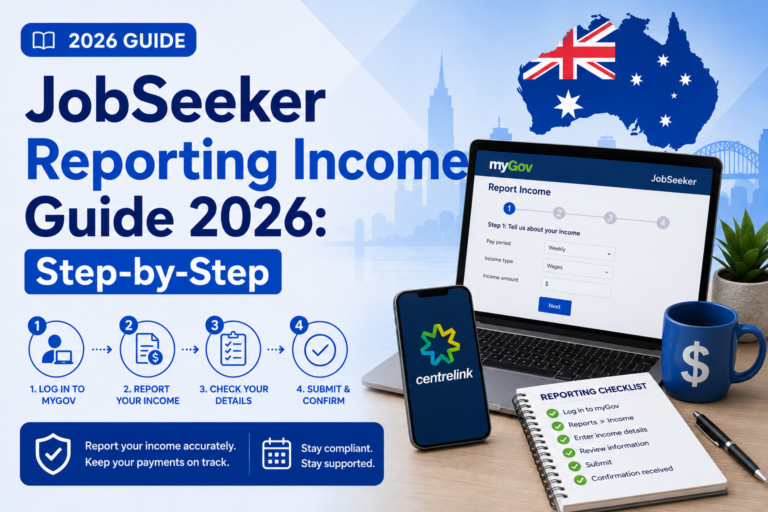
- Log into your myGov account and link Centrelink.
- Attempt to “Make a Claim” for a payment like JobSeeker.
- The digital wizard will automatically assess your visa status and your entry/exit records from the Department of Home Affairs.
- If you are still serving the NARWP, the system will block the claim and explicitly tell you the exact date your waiting period will expire.
If you believe the computer has made an error regarding time you spent on eligible temporary visas, you can request a formal review of the decision. For help navigating the portal, read our Government Application Support Guide.
Frequently Asked Questions
What if I become an Australian Citizen during the waiting period?
Becoming an Australian Citizen does NOT automatically cancel the Newly Arrived Resident’s Waiting Period. If you fast-track your citizenship (which usually takes 4 years anyway), but somehow secure it while still technically inside a waiting period window, you must still serve the remainder of the time before claiming payments like JobSeeker.
Does the waiting period apply to the Age Pension?
The Age Pension and the Disability Support Pension (DSP) do not technically have a NARWP; instead, they have a “Qualifying Residence Requirement.” You must usually have been an Australian resident for a continuous period of at least 10 years before you can claim the Age Pension or DSP.
I am an Australian Citizen returning from living overseas for 10 years. Do I have to wait 4 years?
No. The Newly Arrived Resident’s Waiting Period only applies to migrants holding permanent visas. If you are an Australian citizen returning home from living abroad, you are not a “newly arrived resident.” You can claim JobSeeker immediately, provided you pass the standard income and assets tests.
If my PR sponsor signed an Assurance of Support (AoS), does the wait period apply?
Yes. If you are on a visa that required an Assurance of Support (like a Contributory Parent Visa), your sponsor lodged a massive cash bond. You must still serve all standard waiting periods. Furthermore, if you claim the Special Benefit during the 10-year AoS period, Centrelink will deduct the money you receive directly from your sponsor’s cash bond.
Official Resources
Visa classes and waiting period rules are subject to constant legislative changes. Always verify your specific situation using the official portals:
- Services Australia – Newly Arrived Resident’s Waiting Period
- Department of Home Affairs – Visa Conditions
- myGov Portal
Conclusion
The transition from a temporary migrant to a permanent resident is a monumental milestone, offering unparalleled security and the freedom to build a life in Australia. However, the reality of the Centrelink Waiting Period for New Migrants (NARWP) means that financial independence is more critical than ever during your first four years of residency.
You cannot rely on the JobSeeker Payment or Youth Allowance if you lose your job or decide to return to study. You must have a robust financial safety net, private savings, or reliable family support to weather any economic storms.
Fortunately, the government’s commitment to child welfare ensures that you can access the Family Tax Benefit and Child Care Subsidy immediately, significantly easing the cost of raising a family in Australia. Furthermore, the robust Medicare system protects you from catastrophic healthcare costs from day one.
By understanding how the 4-year waiting period is calculated, ensuring your temporary visa time is accurately recorded by Services Australia, and knowing how to access the emergency Special Benefit if disaster strikes, you can navigate your early years as an Australian Permanent Resident with confidence and security.
Disclaimer
PublicServicesDesk.com is an independent informational website and is not affiliated with, endorsed by, or operated by the Australian Government, Services Australia, Centrelink, Medicare, MyGov, the Australian Taxation Office (ATO), or the Department of Home Affairs. Information is provided for general educational purposes only and may change over time. Always verify important details through official Australian Government websites before making decisions or submitting applications.