Home > Centrelink > Centrelink Debt Notice Guide
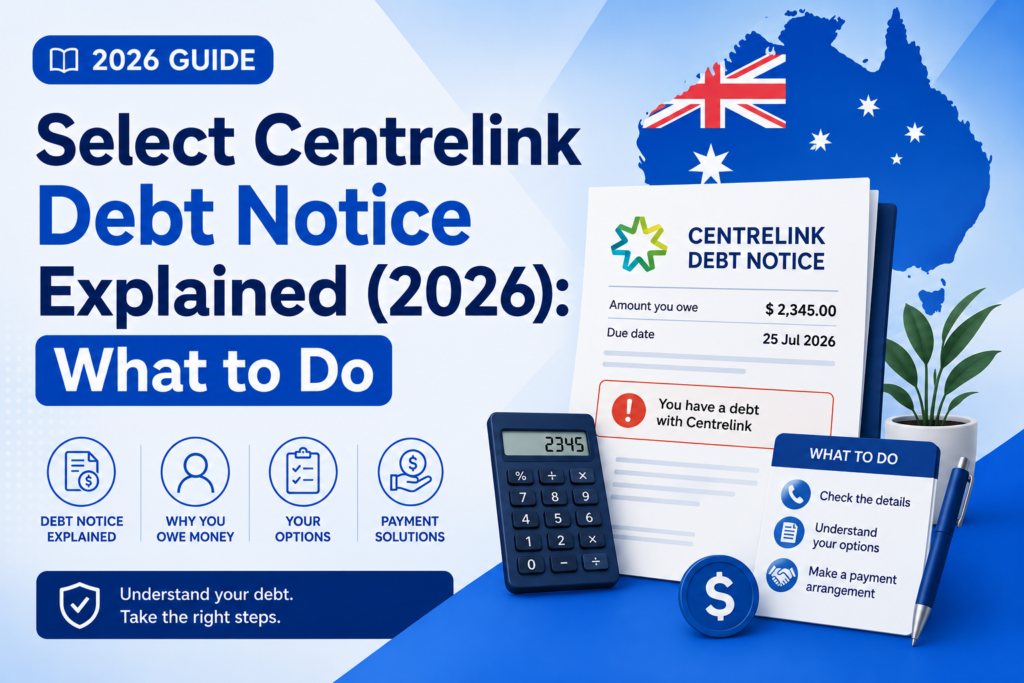
Centrelink Debt Notice Explained (2026): What to Do When You Owe Money
For millions of Australians relying on the social security safety net, there are few things more terrifying than logging into myGov and seeing a bold notification in your inbox with the subject line: “Money you owe.”
A Centrelink Debt Notice indicates that Services Australia believes they have paid you more money than you were legally entitled to receive, and they are now legally demanding that you pay it back. These debts can range from a trivial $50 overpayment due to a slight calculation error, to massive $10,000+ debts accumulated over several years of incorrect income reporting.
The immediate reaction for many people is sheer panic, followed quickly by the urge to bury their head in the sand and ignore the letter. Ignoring a Centrelink debt is the worst possible decision you can make. The government has extraordinary powers to recover funds, including instructing the Australian Taxation Office (ATO) to forcibly seize your entire annual tax refund, or deploying private debt collection agencies to harass you.
However, you have significant legal rights. Centrelink is a massive bureaucracy, and they frequently make mathematical mistakes. You have the right to demand a formal review of the debt. If the debt is legitimate, you have the right to negotiate a repayment plan that you can actually afford, rather than being forced to pay a massive lump sum.
In this comprehensive 2026 guide, we will break down exactly what to do when you receive a Centrelink Debt Notice. We will explain the most common reasons these debts occur, how to identify scam text messages, the step-by-step process to appeal a decision, and how to easily set up a fortnightly deduction plan so you can clear the debt without starving.
Key Takeaways
- Beware of Scams: Centrelink will NEVER send you a text message with a direct link asking you to pay a debt via credit card. Always log directly into my.gov.au to verify the notice in your secure inbox.
- The ‘Gross vs Net’ Trap: The number one cause of Centrelink debt is reporting the “net” pay that lands in your bank account, instead of the “gross” (before tax) income listed on your payslip.
- You Can Appeal: If you believe the debt is wrong, you can request a formal review by an Authorised Review Officer (ARO). During the review process, your debt repayments can often be paused.
- Affordable Repayment Plans: You do not have to pay the debt in one lump sum. You can use the Express Plus app to arrange a small, manageable fortnightly deduction from your ongoing Centrelink payments.
- The ATO Will Intervene: If you ignore the debt, Centrelink will legally instruct the ATO to garnish (seize) your tax return to pay off the balance.
Why Did I Get a Centrelink Debt Notice?
Centrelink debts are rarely malicious cases of intentional welfare fraud. They are overwhelmingly caused by administrative misunderstandings. The system requires you to update Centrelink within 14 days of any change in your circumstances. If you fail to do so, they keep paying you at the higher rate, generating an overpayment debt.
The most common reasons for a debt include:
- The Gross vs Net Income Trap: This is the biggest culprit for people on JobSeeker. When reporting income, you MUST report the Gross amount (before tax). If you report the Net amount (the cash in your bank), Centrelink pays you too much welfare. See our JobSeeker Reporting Income Guide for a full breakdown.
- Moving in with a Partner: If you start living with a romantic partner, you are legally considered “partnered.” Their income now affects your payment. If you don’t tell Centrelink for six months, you will owe back six months’ worth of overpaid “single” rate welfare.
- Changes to Child Care: If your child starts school and requires less care, your Family Tax Benefit or Child Care Subsidy entitlements change.
- Leaving the Country: Most payments stop or reduce if you leave Australia for more than a few weeks. If you don’t tell Centrelink you flew to Bali, they will demand the money back upon your return.
How to Verify the Debt is Real (Avoiding Scams)
Because the fear of government debt is so powerful, scammers frequently send fake “Centrelink Debt” text messages containing malicious links.
Rule #1: Services Australia will NEVER send you an SMS or email with a clickable link asking you to log in or pay a debt via credit card.
If you receive a text message saying “You have an outstanding Centrelink debt, click here to resolve,” delete it immediately.
To verify if a debt is real:
- Open a fresh browser window and type in my.gov.au yourself, or open your official Express Plus Centrelink app.
- Log in securely.
- Check your myGov Inbox. If Centrelink has issued a debt, there will be an official, multi-page PDF letter in your inbox detailing exactly how the debt was calculated.
- Check the “Money you owe” section on your Centrelink dashboard. If it says $0, the text message was a scam.
Step 1: Don’t Panic, and Don’t Ignore It
If the debt is real and sitting in your myGov inbox, the absolute worst thing you can do is close the laptop and pretend it didn’t happen.
Centrelink gives you a strict deadline (usually 28 days from the date of the letter) to either pay the debt in full or enter into a repayment arrangement. If that deadline passes and you have ignored them, Centrelink’s automated debt recovery systems activate.
If you ignore a debt, Centrelink can legally:
- Add interest to the debt (an interest charge is applied to the outstanding balance).
- Instruct your employer to garnish (deduct) money straight out of your wages before you even see it.
- Instruct the ATO to intercept your annual tax refund.
- Refer your file to an external, private debt collection agency, who will call you relentlessly.
- In extreme cases of deliberate, large-scale fraud, refer the matter to the Commonwealth Director of Public Prosecutions (CDPP).
You avoid all of this simply by communicating with them.
Step 2: How to Appeal or Review the Debt
Centrelink makes mistakes. Sometimes they misread an employer’s payslip, or their automated Single Touch Payroll data-matching applies your income to the wrong fortnightly period.
If you read the debt letter and you genuinely believe their mathematics are wrong, you have the legal right to ask for a formal review. This is free.
The Authorised Review Officer (ARO) Process
- Call the Debt Recovery Line: Call the number on your debt letter (usually 1800 076 072). Explain calmly why you think the debt is wrong. Sometimes, the frontline staff can spot the error immediately and fix it on the spot.
- Request a Formal Review: If the frontline staff cannot fix it, explicitly state: “I want to request a formal review of this decision by an Authorised Review Officer (ARO).”
- Provide Evidence: The ARO is a senior, independent officer within Services Australia. You must provide them with evidence to prove Centrelink is wrong (e.g., bank statements, letters from your employer, signed rental agreements).
- Pause the Debt: Crucially, when you request an ARO review, you can ask for the debt recovery to be paused. This means you do not have to make any repayments while the ARO is investigating the case (which can take months).
If the ARO decides the debt is correct and you still disagree, you can escalate the matter externally to the Administrative Appeals Tribunal (AAT).
Step 3: Setting Up an Affordable Repayment Plan
If you acknowledge that you made a mistake (e.g., you accidentally reported Net income instead of Gross) and the debt is valid, you must set up a repayment plan. You do not have to pay the $3,000 debt in one lump sum today.
Centrelink prefers to recover the money slowly over time via automatic deductions from your current welfare payments.
How to set up a plan via the Express Plus App:
- Open the app and tap ‘More’.
- Select ‘Money you owe’.
- Select the specific debt.
- Tap ‘Set up a repayment arrangement’.
- If you are currently receiving a Centrelink payment, you can select ‘Deduct from my payment’.
- The app will suggest a standard deduction amount (e.g., $40 per fortnight). If you can afford this, accept it. Centrelink will automatically withhold $40 from your pay until the debt is cleared.
If you are no longer receiving a Centrelink payment (e.g., you got a full-time job), you can use the portal to set up a direct debit from your bank account or a BPAY schedule to pay it off weekly or monthly.
What Happens if I Can’t Afford to Pay? (Financial Hardship)
The standard deduction Centrelink suggests (usually around 15% of your payment) might mean you cannot afford to buy groceries or pay rent. You are not forced to accept the standard deduction.
If the repayment plan will cause you severe financial hardship, you must call the Debt Recovery Line.
- Negotiate a Lower Rate: You can explain your budget to the operator. They have the power to lower the repayment amount to as little as $15 or $20 a fortnight, ensuring you can still afford to live while slowly clearing the debt.
- Pause the Debt (Temporary Stay): If you have just been evicted, experienced a natural disaster, or are facing an extreme medical crisis, Centrelink can place a “temporary stay” on the debt. They will pause all repayments for 3 to 6 months, giving you time to financially stabilize before the deductions resume.
Can Centrelink Take My Tax Return? (Garnishing)
Yes. This is one of the most common ways people discover they have an old, forgotten Centrelink debt.
Under federal law, Services Australia and the Australian Taxation Office (ATO) share data. If you have an outstanding Centrelink debt that you have been ignoring (or simply haven’t paid off yet), Centrelink will place a “garnishee” order on your ATO file.
When you lodge your tax return in July, and the ATO calculates you are owed a $1,500 tax refund, the ATO will see the Centrelink order. Instead of sending the $1,500 to your bank account, the ATO will send the money directly to Centrelink to pay off your debt. If the debt was only $500, Centrelink takes their $500, and the ATO transfers the remaining $1,000 to you.
This is automatic and legal. If you are relying on your tax return for a major purchase, you must check your myGov “Money you owe” section before July to ensure you aren’t blindsided by a garnishment.
The ‘Robodebt’ Legacy and Current Rules
Many Australians are deeply distrustful of Centrelink debt notices due to the highly publicized and illegal “Robodebt” scheme that ran during the 2010s. Under that scheme, computers automatically averaged annual ATO income data across 26 fortnights, generating millions of false debts without human oversight.
That scheme was ruled unlawful and was entirely abolished. Today, the system is fundamentally different:
- Centrelink can no longer use “income averaging” to prove a debt.
- A human officer must review the evidence (like actual payslips or precise Single Touch Payroll data) before a debt notice is issued.
- The burden of proof now rests heavily on Centrelink to prove you were overpaid, rather than forcing you to prove you weren’t.
While the new system is legal and much more accurate, human and data-entry errors still occur. If the math looks wrong, always exercise your right to request an ARO review.
Frequently Asked Questions
Will a Centrelink debt affect my credit score?
No. Standard Centrelink overpayment debts are not reported to commercial credit bureaus (like Equifax or Experian). Having a Centrelink debt will not appear on your credit file and will not stop you from getting a bank loan or a mortgage.
Can I get an Advance Payment if I have a debt?
Generally, no. If you owe Centrelink money, you are usually ineligible for a new Centrelink Advance Payment. You must clear your existing debt before you can borrow from your future entitlements.
Can Centrelink waive a debt completely?
Yes, but it is exceptionally rare. A debt can only be fully waived under legislation if the debt was caused solely by a Centrelink administrative error AND you received the money in “good faith” (meaning a reasonable person wouldn’t have noticed they were being overpaid). If you contributed to the error (e.g., by reporting income late), they will not waive it.
What if I declare bankruptcy?
If you declare formal bankruptcy, standard Centrelink overpayment debts are usually included as provable debts and may be wiped. However, if the debt was the result of deliberate fraud (e.g., you were convicted in court of welfare fraud), bankruptcy does not wipe the debt.
Official Resources
For immediate assistance with a debt notice, use the official government channels:
Conclusion
Receiving a Centrelink Debt Notice is an incredibly stressful experience, but it is a manageable administrative issue, not the end of the world. The welfare system processes millions of complex, dynamic claims every day; overpayments are a common, expected byproduct of this massive bureaucracy.
The golden rule for handling a debt is to take immediate, proactive action. Log into your myGov account to verify the notice is genuine and not a scam. If you disagree with the mathematics, exercise your legal right to demand a formal review by an Authorised Review Officer, and ask them to pause recovery action while they investigate.
If the debt is legitimate, swallow the bitter pill and set up a repayment plan immediately via the Express Plus app. By negotiating a small, affordable fortnightly deduction, you can slowly clear the balance over time while preventing Centrelink from escalating the matter to external debt collectors or garnishing your hard-earned ATO tax refund.
Disclaimer
PublicServicesDesk.com is an independent informational website and is not affiliated with, endorsed by, or operated by the Australian Government, Services Australia, Centrelink, Medicare, MyGov, the Australian Taxation Office (ATO), or the Department of Home Affairs. Information is provided for general educational purposes only and may change over time. Always verify important details through official Australian Government websites before making decisions or submitting applications.