Home > Centrelink > Child Care Subsidy Australia 2026
Childcare Subsidy Australia 2026: Eligibility, Rates & How to Apply
For modern Australian families, the cost of early childhood education can often rival a mortgage repayment. The decision for a parent (typically the mother) to return to the workforce after parental leave is frequently dictated not by career ambition, but by a brutal mathematical equation: Will my daily wage actually cover the daily cost of daycare?
To ensure that working remains financially viable, and to encourage early childhood education, the Australian Government provides the Child Care Subsidy (CCS).
Unlike standard welfare payments that are deposited into your bank account, the CCS is an indirect subsidy. Services Australia pays the money directly to your approved childcare provider, which reduces the final out-of-pocket fee you are charged. While the concept is simple, the calculation behind it is notoriously complex. Centrelink uses a highly dynamic three-pronged test to determine exactly how much of your childcare bill the government will cover.
In this comprehensive 2026 guide, we will demystify the Childcare Subsidy in Australia. We will break down the strict immunisation requirements, explain the mathematical intricacies of the Income Test and the Activity Test, warn you about the “hourly rate cap” trap, and provide a step-by-step tutorial on how to apply flawlessly through myGov to avoid massive end-of-year tax debts.
Key Takeaways
- Paid to the Provider: You do not receive this money in your bank account. Centrelink pays the subsidy directly to your daycare center, reducing your weekly invoice.
- No Jab, No Play: Your child must be fully up-to-date with the Australian Immunisation Register schedule (or have an approved medical exemption). If they are not vaccinated, you get zero subsidy.
- The Activity Test is Crucial: The percentage the government pays is based on your income, but the number of hours they will subsidize is based entirely on how much you work or study. If you don’t work, your subsidized hours are severely restricted.
- The Hourly Rate Cap: The government only subsidizes up to a maximum hourly rate (e.g., $14 per hour). If your premium daycare charges $18 an hour, you must pay the $4 gap entirely out of your own pocket, regardless of your subsidy percentage.
- The 5% Withholding: Centrelink automatically holds back 5% of your subsidy every fortnight. They do this to protect you; if you accidentally underestimate your annual income, this 5% buffer prevents you from owing the government thousands of dollars at tax time.
What is the Child Care Subsidy (CCS)?
The Child Care Subsidy (CCS) is the primary Australian government initiative to help families with the cost of approved child care. It replaced the old, confusing dual system of the Child Care Benefit and Child Care Rebate.
The system is means-tested. The core philosophy is that low-income families receive the highest level of financial support (with the government covering up to 90% of the cost), while very high-income families receive little to no support.
Because the money is paid directly to the childcare provider, your daily interaction with the CCS is minimal once it is set up. You simply receive an invoice from your daycare center showing the “Gross Fee,” the “CCS Reduction,” and the final “Out of Pocket/Gap Fee” that you must pay.
Basic Eligibility (Immunisations and Approved Care)
Before Centrelink even looks at your income or work hours, you must pass three absolute baseline requirements:
- Age and Schooling: The child must be under 13 years old and not attending secondary school (though some exemptions exist for children with disabilities).
- Approved Care: You must be using an “Approved Child Care Provider.” This includes standard Long Day Care centers, Family Day Care, Outside School Hours Care (OSHC), and approved In-Home Care. You cannot claim the CCS if you simply pay your neighbor or an unapproved private nanny to watch your child.
- Immunisation (No Jab, No Play): Australia enforces strict public health laws. To receive the CCS, your child must meet the immunization requirements. They must be fully up-to-date with the National Immunisation Program Schedule, be on an approved catch-up schedule, or have an approved medical exemption recorded on the Australian Immunisation Register. Conscientious objection (anti-vax) is no longer a valid exemption for the subsidy.
Furthermore, you (or your partner) must meet Australian residency requirements, which generally means holding Australian citizenship or a Permanent Resident visa.
How the Subsidy is Calculated (The Three Pillars)
The amount of money the government pays is determined by a complex interplay of three factors: Your Income, Your Activity, and the Hourly Cap. To estimate your specific numbers, you can use our Benefits Calculator.
1. The Income Test (The Percentage)
Centrelink assesses your combined family income (what you and your partner earn together) to determine the percentage of the childcare fee they will subsidize.
Recent reforms have made the CCS significantly more generous for middle-income families.
- Low Income (Up to ~$83,000): Families earning below this threshold receive the maximum subsidy of 90%.
- Middle Income (~$83,000 to ~$530,000): The subsidy percentage tapers off. For every $5,000 of income you earn over the $83,000 base, your subsidy percentage drops by 1%. (For example, a family earning $133,000 will receive roughly an 80% subsidy).
- High Income (Over ~$530,000): Families earning above this absolute ceiling receive 0% subsidy. They pay full price for childcare.
2. The Activity Test (The Hours)
The income test determines the percentage, but the Activity Test determines how many hours per fortnight the government will apply that percentage to.
Centrelink wants to encourage workforce participation. The more you work, the more hours of childcare they will subsidize. “Activity” includes paid work, self-employment, unpaid work in a family business, formal study/training, or actively looking for work.
If you are a couple, Centrelink looks at the person who does the least amount of activity to determine your hours.
- Less than 8 hours of activity per fortnight: You get 0 hours of subsidized care (unless you meet a low-income exemption, which grants 24 hours).
- 8 to 16 hours of activity: You get 36 hours of subsidized care per fortnight.
- 16 to 48 hours of activity: You get 72 hours of subsidized care per fortnight.
- More than 48 hours of activity: You get the maximum 100 hours of subsidized care per fortnight.
Note: If you work full-time (76 hours a fortnight) but your partner stays at home and does 0 hours of recognized activity, your family is entitled to 0 subsidized hours.
3. The Hourly Rate Cap (The Trap)
This is where many parents are blindsided by unexpected costs.
The government sets a maximum hourly rate cap that they are willing to subsidize (historically around $13.73 per hour for Center-Based Day Care). The government will only pay your CCS percentage up to this capped rate.
Example of the Trap:
Your CCS percentage is 80%. The government hourly cap is $13.73.
You send your child to an expensive, premium daycare that charges $18.00 per hour.
Centrelink will pay 80% of $13.73 (which is $10.98).
You must pay the remaining 20% of the capped rate ($2.75) PLUS the entire amount above the cap ($18.00 – $13.73 = $4.27).
Your out-of-pocket cost is $7.02 per hour, not the $3.60 you might have assumed if you just calculated 20% of the total fee.
Higher Subsidy for Multiple Children
To alleviate the crushing burden on large families, the government introduced the Higher Child Care Subsidy. If you have more than one child aged 5 or under in approved child care, your subsidy percentage automatically increases for your second (and any younger) children.
The subsidy for these younger children can increase by up to 30%, maxing out at a 95% subsidy rate. Centrelink automatically calculates this; you do not need to submit a separate application.
The 5% Withholding Rule (Avoiding Debts)
When you apply for the CCS, Centrelink asks you to estimate your family income for the upcoming financial year. Because income fluctuates (overtime, bonuses, job changes), it is very easy to underestimate how much you will earn.
If you underestimate your income, Centrelink pays you too much subsidy throughout the year. When you do your tax return, they realize their mistake and hit you with a massive Centrelink debt.
To protect you from this, Centrelink automatically holds back 5% of your weekly subsidy entitlement.
At the end of the financial year (after you and your partner lodge your tax returns with the ATO), Centrelink performs a process called “balancing.” If your income estimate was perfectly accurate, they will refund that withheld 5% directly into your bank account as a lump sum. If you underestimated your income, the withheld 5% is used to absorb the debt.
Step-by-Step Process: How to Apply via myGov
You should apply for the CCS as soon as you know when your child might start care. Do not wait until their first day, as processing can take weeks.
- Link Centrelink to myGov: Ensure you have a secure myGov account linked to Centrelink.
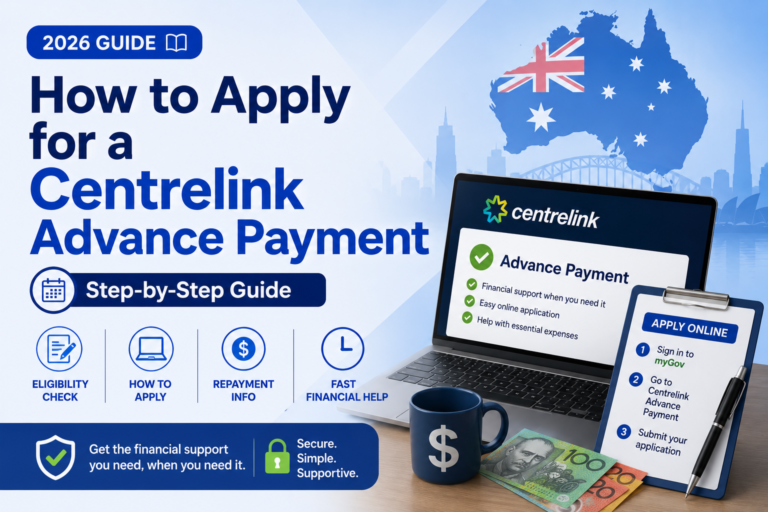
- Start the Claim: Log into myGov, open Centrelink, select ‘Make a Claim’, go to ‘Families’, and choose ‘Child Care Subsidy’.
- Answer Eligibility Questions: You will be asked about your child, their immunisation status, your residency, and your partner’s details.
- Provide Income Estimate: You must carefully estimate your combined family income for the current financial year. Be as accurate as possible.
- Complete the Activity Test: Detail exactly how many hours you and your partner work, study, or volunteer each fortnight.
- Submit Documents: You may need to upload birth certificates or citizenship documents if Centrelink does not already have them.
- Confirm Enrollment: After you submit the claim, you must enroll your child at the daycare center. The center will electronically send an enrollment notice to Centrelink. You must log back into myGov and click “Confirm Enrollment” before Centrelink will pay a single dollar.
For detailed help with the digital portal, read our Government Application Support Guide.
The Importance of Updating Your Income Estimate
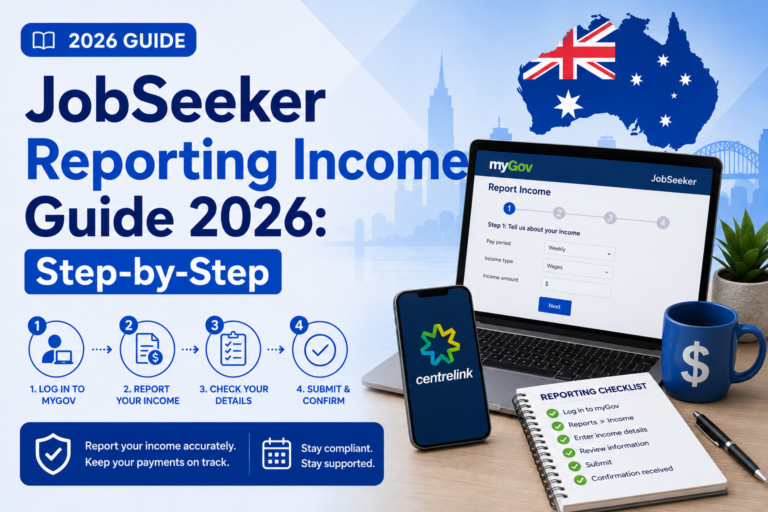
The CCS is entirely reliant on the income estimate you provide. If you secure a promotion, get a new job, or start working more hours, you must immediately log into the Express Plus Centrelink App and update your family income estimate.
If you fail to do this, Centrelink will continue paying your subsidy based on your old, lower income. When the Australian Taxation Office (ATO) shares your final tax data with Centrelink in July, the discrepancy will trigger a severe overpayment debt that the 5% withholding will not be able to cover.
Additional Child Care Subsidy (ACCS) for Hardship
If you are experiencing extreme vulnerability, you may be eligible for the Additional Child Care Subsidy (ACCS). This provides a much higher level of support—often covering 100% of childcare fees without enforcing the Activity Test.
You may be eligible for the ACCS if:
- The child is at serious risk of abuse or neglect.
- You are a grandparent who has taken primary, full-time custody of your grandchild.
- Your family is experiencing severe, temporary financial hardship (e.g., your house burned down, or a primary earner died suddenly).
- You are actively transitioning to work from an income support payment (like JobSeeker or Parenting Payment).
Frequently Asked Questions
What happens if my child is sick and misses a day?
Childcare centers still charge you if your child is absent. Fortunately, Centrelink will still pay the Child Care Subsidy for up to 42 allowable absence days per child, per financial year. You can use these for sickness, family holidays, or simply keeping them home for a rest, without needing a medical certificate.
Can I claim CCS for a private nanny?
No. You can only claim the CCS if you are using an “Approved Child Care Provider” registered with the government. Private, informal nannies and babysitters are not approved providers.
Does maternity leave count towards the Activity Test?
Yes. If you are on paid or unpaid maternity leave (or parental leave), you are still considered to be “employed” by your workplace. Centrelink will count the hours you normally worked before you went on leave towards your Activity Test, ensuring your older children can stay in daycare while you care for the newborn.
Why did my CCS suddenly stop?
The most common reasons are: 1) You failed to lodge your tax return (or inform Centrelink you didn’t need to lodge one) by the deadline, causing Centrelink to freeze your subsidy. 2) Your child fell behind on their required immunisation schedule. 3) Your child did not attend care for 14 consecutive weeks, which automatically cancels their enrollment.
Official Resources
Income thresholds, hourly rate caps, and immunisation schedules are frequently updated. Always refer to the official government portals:
- Services Australia – Child Care Subsidy Overview
- Services Australia – Activity Test Detailed Rules
- myGov Portal
Conclusion
The Childcare Subsidy (CCS) is the engine that allows Australian parents to return to the workforce without their entire salary being absorbed by daycare fees. The recent legislative changes pushing the maximum subsidy rate to 90% and offering higher subsidies for multiple children have made early childhood education significantly more affordable for the majority of families.
However, securing the maximum benefit requires strict administrative diligence. You must ensure your child remains up-to-date with their immunisations to satisfy the “No Jab, No Play” laws. You must carefully calculate your work and study hours to pass the Activity Test, and you must be hyper-vigilant regarding your family income estimate.
The system is unforgiving to those who “set and forget.” By regularly updating your income estimate via the Express Plus app whenever you receive a pay rise, and understanding the financial implications of the hourly rate cap when choosing a premium daycare provider, you can safely navigate the CCS system, avoid end-of-year tax debts, and give your child the best possible start to their education.
Disclaimer
PublicServicesDesk.com is an independent informational website and is not affiliated with, endorsed by, or operated by the Australian Government, Services Australia, Centrelink, Medicare, MyGov, the Australian Taxation Office (ATO), or the Department of Home Affairs. Information is provided for general educational purposes only and may change over time. Always verify important details through official Australian Government websites before making decisions or submitting applications.