Home > Government Services > National ID Requirements
National ID Requirements for First-Time Applicants (2026 Guide)
The core objective of the Philippine Identification System (PhilSys) is to provide every citizen and resident alien with a foundational, unbreakable proof of identity. The National ID is designed to be the “ID to end all IDs,” streamlining banking, government services, and digital transactions across the nation.
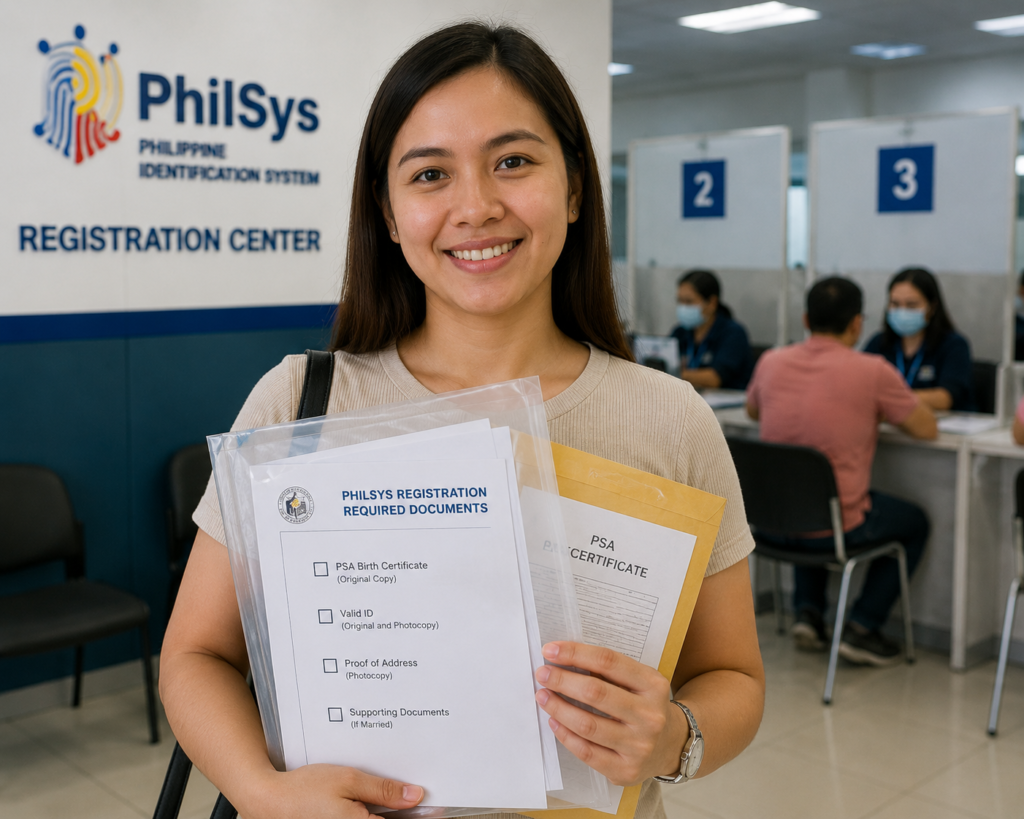
However, because the National ID holds such immense legal power, the Philippine Statistics Authority (PSA) must be absolutely certain that you are who you claim to be before they issue it. This is why the verification process at the Step 2 biometric registration centers is so stringent. You cannot simply walk in and verbally state your name; you must prove it through a strict hierarchy of official documentary evidence.
Every day, hundreds of Filipinos are turned away from registration centers—despite having successfully booked a National ID appointment online—simply because they brought photocopies instead of originals, or they brought a secondary ID that lacked a photograph, or their documents had conflicting spellings of their name.
To ensure your registration is smooth, fast, and successful on your first attempt, we have created this comprehensive 2026 guide outlining the exact National ID requirements. We will break down the difference between Primary and Secondary documents, detail the specific requirements for minors and resident aliens, and highlight the most common documentary mistakes that lead to instant rejection.
Key Takeaways
- Originals Only: The PSA screening officers will not accept photocopies, scanned printouts, or digital photos of your documents on your phone. You must physically hand them the original, hard-copy document.
- The Primary Document Rule: If you possess a Primary Document (like a valid Passport, UMID, or LTO Driver’s License), you only need to bring that ONE document. No other ID is required.
- PSA Birth Certificate Nuance: A PSA-issued Certificate of Live Birth is highly recommended, but if you use it as your primary document, it must be accompanied by at least one other government-issued ID that contains your front-facing photograph and signature.
- Secondary Documents as Fallbacks: If you have zero Primary Documents, you can present one Secondary Document (like a Voter’s ID, Senior Citizen ID, or NBI Clearance), provided it clearly displays your full name, photo, and signature.
- Minors Need Guardians: Applicants under 18 years old must be accompanied by a parent or legal guardian, and their PhilSys registration will be linked to their guardian’s PhilSys Number (PSN).
Overview: Why Document Verification is Strict
Identity theft and fraud are significant issues in the Philippines. Prior to PhilSys, bad actors could exploit the fragmented ID system by obtaining a low-security ID (like a barangay clearance) under a fake name, and using that to slowly build a portfolio of stronger, fraudulent government IDs.
The PhilSys National ID is designed to permanently shut down this vulnerability. By capturing your unique biometrics (iris scan and fingerprints) and binding them permanently to your verified demographic data, the PSA ensures one person can only ever have one identity.
Consequently, the documents you present during your initial registration form the foundational bedrock of your digital identity. If the PSA accepts a fake or erroneous document, they effectively legitimize a fraudulent identity in the national database. This is why the screening officers at the registration centers are trained to be meticulous, unforgiving, and exceptionally strict regarding the original documents you present.
Eligibility: Who Can Register for PhilSys?
Before gathering your documents, you must confirm you are legally eligible to apply. The eligibility net is intentionally cast very wide to ensure financial inclusion for everyone.
- Filipino Citizens: All Filipino citizens currently residing in the Philippines, regardless of age (even infants can be registered). Note that overseas registration for Overseas Filipino Workers (OFWs) and dual citizens living abroad is being rolled out in specific phases via Philippine embassies and consulates.
- Resident Aliens: Foreign nationals who have been living in the Philippines for at least six (6) consecutive months and intend to continue residing in the country. (Tourists and short-term visitors are not eligible).
Requirements: Primary Documents (The Gold Standard)
To breeze through the screening process, you should aim to present a Primary Document. These are the highest-tier identification documents recognized by the Philippine government because they already underwent rigorous vetting prior to issuance.
If you have any ONE of the following documents, you do not need to bring anything else (though bringing a backup is always smart):
- Philippine Passport or ePassport: Issued by the Department of Foreign Affairs (DFA). It must be valid (not expired).
- Unified Multi-purpose Identification (UMID) Card: Issued by the Government Service Insurance System (GSIS) or the Social Security System (SSS).
- Student’s License Permit or Non-Professional/Professional Driver’s License: Issued by the Land Transportation Office (LTO) in card format. (Temporary paper licenses without a photo may be rejected).
The PSA Birth Certificate Exception
The PSA-issued Certificate of Live Birth is technically a primary document, but because it does not have a photograph or a signature, it cannot be used entirely on its own for adults.
If you are using your PSA Birth Certificate as your primary proof, you MUST present it alongside one (1) government-issued identification document that bears your full name, a front-facing photograph, and your signature or thumb mark (e.g., a Postal ID or a valid school ID).
(Note: For married women who wish to use their married surname, bringing a PSA-issued Certificate of Marriage is mandatory, regardless of which primary ID they present).
Requirements: Secondary Documents (The Alternatives)
The PSA recognizes that millions of marginalized Filipinos, particularly in rural areas or those working in the informal economy, do not have Passports or Driver’s Licenses. The system is designed to be inclusive.
If you do not possess any of the Primary Documents listed above, you may present ONE (1) of the following Secondary Documents. The critical rule is that the secondary document must contain your full name, a front-facing photograph, and your signature or thumb mark.
- PSA-issued Certificate of Live Birth or NSO-issued Certificate of Live Birth (Even without a photo ID, though expect a rigorous interview by the screening officer).
- LCRO-issued Certificate of Live Birth (Local Civil Registry Office).
- Voter’s ID issued by the Commission on Elections (COMELEC).
- Senior Citizen’s ID issued by the Office for Senior Citizens Affairs (OSCA).
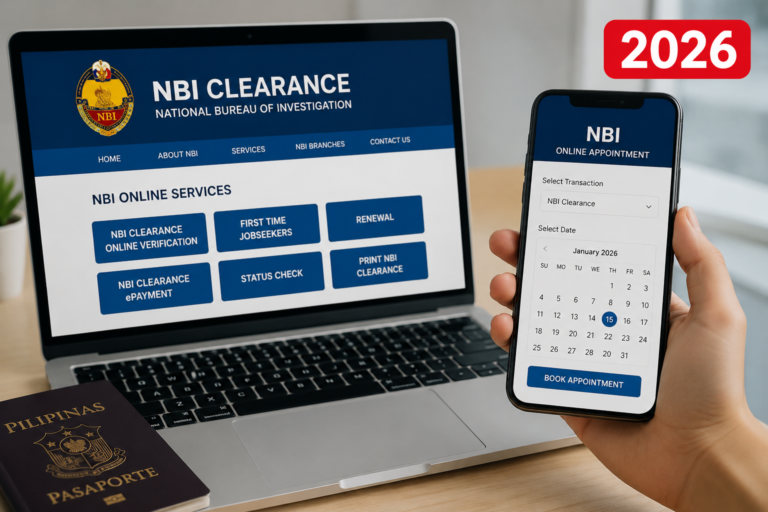
- NBI Clearance or Police Clearance (must be valid/unexpired).
- Persons with Disabilities (PWD) ID issued by the National Council on Disability Affairs (NCDA) or local equivalent.
- Valid School ID (for currently enrolled students).
- Valid Employee ID (from a registered private or public employer).
- Barangay Clearance/Certificate (This is acceptable, but it MUST strictly follow the standard format: it must have your affixed photograph, your signature, and the dry seal of the Barangay).
- Solo Parent ID.
- Seaman’s Book (SIRB).
Special Requirements for Minors and Children
Registering a child requires additional steps to establish guardianship and prevent child trafficking.
- Accompaniment: Applicants below eighteen (18) years of age must be accompanied by a parent or legal guardian during the Step 2 biometric registration.
- Guardian’s PhilSys Number: The parent or legal guardian must have already registered for PhilSys and possess their PhilSys Number (PSN) or PhilSys Card Number (PCN). The child’s demographic data will be permanently linked to the guardian’s PSN.
- Child’s Documents: The most standard document to bring for a minor is their PSA-issued Certificate of Live Birth. If they are a student, their valid School ID is an excellent secondary document.
- Biometrics for Under 5s: For children aged 1 to 4 years old, only their demographic data and a front-facing photograph will be captured. Their fingerprints and iris scans are not fully developed and will not be taken. They will need to update their biometrics when they turn 5, and again when they turn 15.
Requirements for Resident Aliens
Foreign nationals residing in the Philippines must prove their legal, long-term residency status to be eligible for the National ID.
Resident aliens must present their Alien Certificate of Registration Identity Card (ACR I-Card) issued by the Bureau of Immigration (BI). This serves as their primary documentary requirement. They should also bring their foreign passport as supplementary evidence of identity.
Step-by-Step Process: Presenting Your Documents
Understanding the flow of the registration center will help you prepare your documents accordingly.
- Step 1 (Online): Ensure you have already completed the online demographic registration and generated your Application Reference Number (ARN). If you haven’t, read our guide on how to book a National ID appointment online.
- Arrival at the Center: Arrive 15 minutes before your scheduled timeslot. Present your ARN (printed or screenshot) to the queue manager.
- Screening Desk: You will be directed to a screening officer. This is where you physically hand over your original Primary or Secondary documents. The officer will verify that the spelling of your name on the document perfectly matches the data you entered online during Step 1.
- Data Verification: You will sit in front of a computer monitor. The officer will ask you to confirm that all your demographic details (address, birthdate, marital status) are correct. Do not rush this step. If there is a typo, fix it now.
- Biometric Capture: Once your documents are verified, you will proceed to the biometric booth for your iris scan, fingerprint scanning, and front-facing photograph.
- Issuance of TRN: You will be handed a transaction slip containing your Transaction Reference Number (TRN). You will use this to check your National ID status online.
Processing Time at the Registration Center
Provided you bring the correct, original documents, the entire in-person process at the Step 2 registration center is highly efficient. The document screening, data verification, and biometric capture usually take no more than 15 to 30 minutes per applicant.
However, if you bring an expired ID, a photocopy, or if your name on your ID does not match the name you typed in your online form, the screening officer will pause your application. You may be asked to step aside, fill out correction forms, or you may be rejected entirely and told to rebook an appointment when you have the correct documents.
Common Mistakes to Avoid (Why People Get Rejected)
Do not let a simple administrative oversight waste your appointment timeslot. Avoid these crucial errors:
- Bringing Photocopies: This is the number one reason for rejection. The PSA operates on a strict “Originals Only” policy. You cannot show them a xerox copy of your birth certificate or a photo of your driver’s license on your phone.
- Name Discrepancies: Your name on your supporting documents must exactly match the name you registered. If your Birth Certificate says “Maria Santos” but your Employee ID says “Mary Santos,” the screening officer may flag the discrepancy. Always rely on the spelling of your PSA Birth Certificate as the ultimate source of truth.
- Expired IDs: If you are using a Passport, NBI Clearance, or Driver’s License as your primary document, it must be currently valid. An expired ID is legally invalid for identification purposes.
- Barangay Clearances Without Photos: A simple printed piece of paper from the Barangay Captain is not enough. To be accepted as a secondary ID, the Barangay Clearance must have your actual photograph attached, your signature, and the official dry seal stamped over the photo to prevent tampering.
- Women Assuming Married Names Prematurely: If you were recently married and wish to use your husband’s surname on your National ID, you must bring an original PSA Certificate of Marriage. If you don’t have it yet, you must register under your maiden name.
Frequently Asked Questions
What if I have absolutely zero IDs and no Birth Certificate?
The PSA has provisions for extreme cases, particularly for Indigenous Peoples or individuals in remote areas. In the absence of any documents, you may be allowed to register through an introducer-based system, where a registered official (like a Barangay Captain or a registered social worker) formally vouches for your identity. However, this is a complex, manual process.
Do I need to bring a 1×1 or 2×2 ID picture?
No. You do not need to bring any physical ID pictures. Your official photograph will be captured digitally using a high-resolution camera during the Step 2 biometric process at the registration center.
Is a TIN ID or PhilHealth ID accepted?
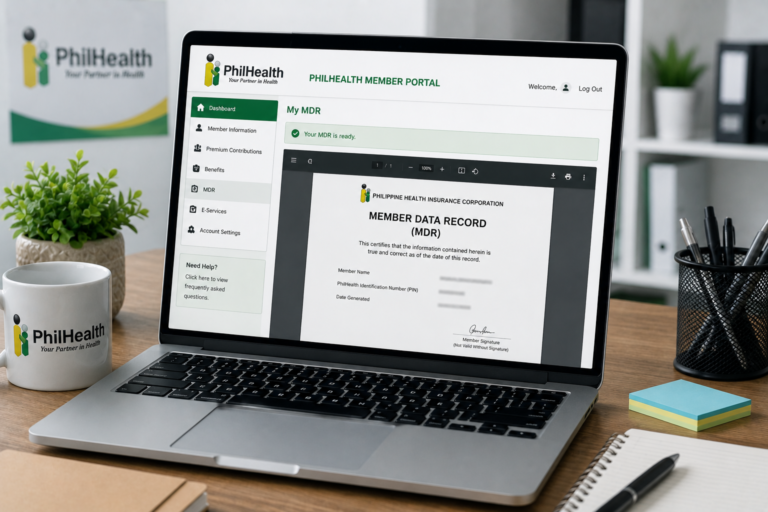
Standard cardboard TIN IDs and PhilHealth IDs are generally considered weak forms of identification because they are easily forged and often lack secure photographs. They are usually not accepted as standalone Primary or Secondary documents unless they are the newer, digitized PVC versions that include a clear photo and signature. It is always safer to rely on a Passport, UMID, or PSA Birth Certificate.
Do I need to pay for the National ID?
No. The initial registration and issuance of the PhilSys National ID (including the physical PVC card and the digital ePhilID) is completely free of charge for all eligible citizens and resident aliens.
Official Resources
Documentary requirements are subject to occasional updates by the government. Always verify the current accepted list on the official portals before your appointment:
- PSA PhilSys – Official List of Supporting Documents
- Official PhilSys Registration Portal
- Philippine Statistics Authority (PSA) Main Website
Conclusion
Preparing the correct National ID requirements before you leave your house is the single most important factor in ensuring a successful registration experience. The Philippine Statistics Authority is not being difficult for the sake of bureaucracy; they are enforcing strict verification protocols to protect the integrity of your identity and the security of the national database.
Always aim to bring the “Gold Standard” Primary Documents—a valid Passport, a UMID, or a Driver’s License. If you must rely on your PSA Birth Certificate or a Secondary Document like a Barangay Clearance, ensure it strictly meets the criteria regarding your photograph and signature.
By double-checking your paperwork, ensuring every document is an original copy, and verifying that the spellings match your online demographic data, you will breeze through the Step 2 biometric capture in 15 minutes. Once completed, you can simply keep your transaction slip secure and wait for your card to arrive, or check your status online to download your digital ePhilID.
Disclaimer
PublicServicesDesk.com is an independent informational website and is not affiliated with, endorsed by, or operated by the Philippine Statistics Authority (PSA) or the Philippine Government. Information is provided for general educational purposes only and may change over time. Always verify important details through official Philippine Government websites before making decisions or submitting applications.



[…] The PhilSys card doesn’t expire for Filipino citizens, but we have a National ID Renewal Guide for foreign residents and special […]